Learn which dated, vehicle-specific hybrid battery records to request and how to interpret diagnostics, warning lights and programme limits.
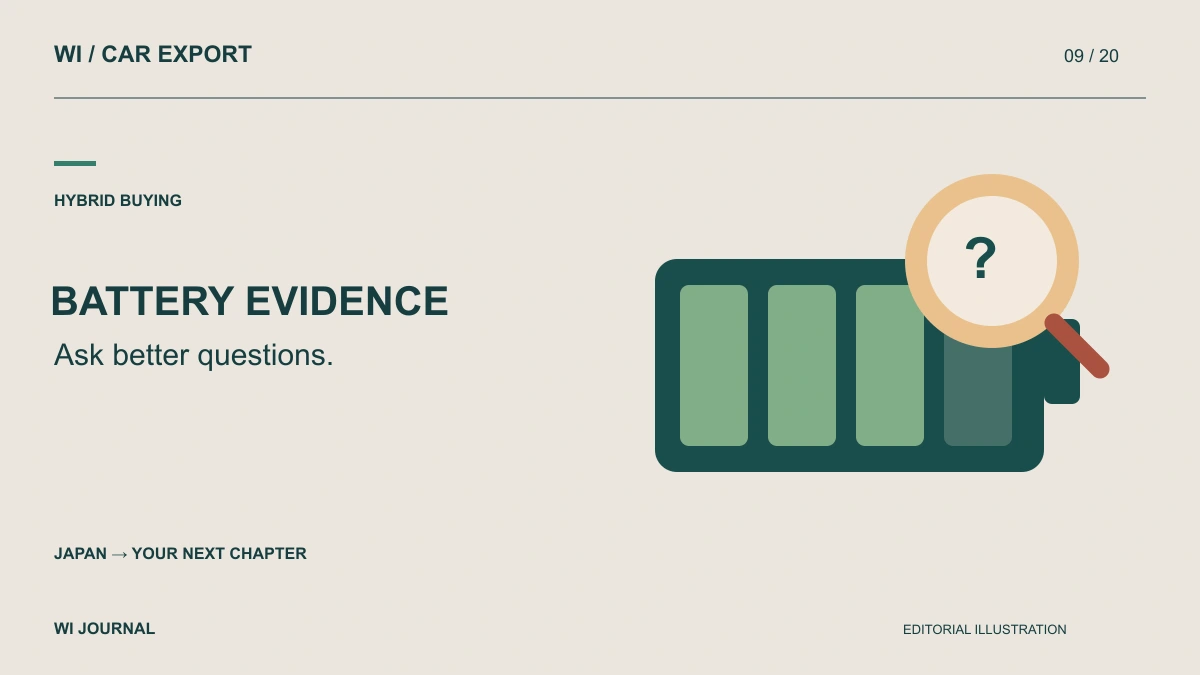
There is no single photograph or dashboard observation that proves a used hybrid battery is healthy. The better approach is to request a small evidence pack tied to the exact vehicle, then separate what was measured from what was merely observed.
This is a buyer’s evidence framework, not a remote diagnosis. Battery designs, diagnostic outputs and service procedures vary by manufacturer, model and generation.
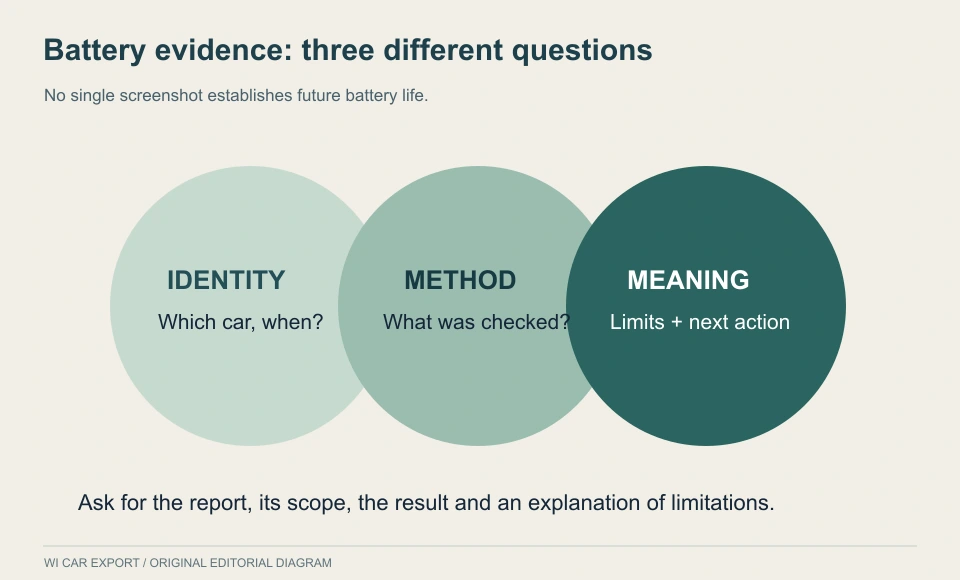
Start by tying every record to the car
Battery evidence is useful only when you can connect it to the vehicle under consideration. Ask for the frame or chassis number shown on the record, the model code, the date of the check and the odometer reading at that time. If a diagnostic page has no identity or date, treat it as context rather than proof about the current listing.
The age of the evidence also matters. A result records a condition at a point in time; it cannot guarantee future battery capacity, reliability or remaining life.
Ask for evidence in layers
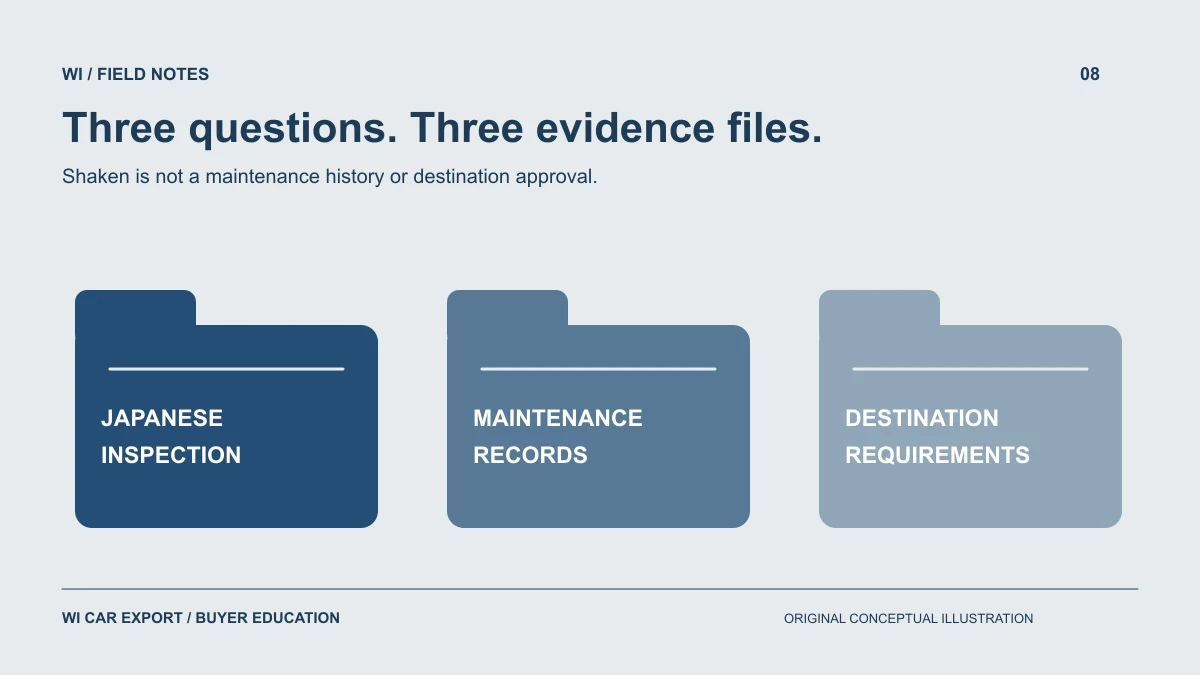
Rather than asking “Is the battery good?”, request the following items in order of usefulness and availability:
- A dated hybrid-system diagnostic report. Ask which system or tool produced it and what the reported fields mean for that exact model. Retain the complete page rather than a cropped score.
- Diagnostic trouble-code information. Request the scan result with the tool's own status labels and a model-specific explanation. Separately ask whether code memory was cleared before the check and whether that is documented. No-code evidence is not a capacity measurement.
- Available battery measurements. Depending on the vehicle and tool, these might include capacity-related information, voltage data or other manufacturer-specific results. Do not apply a threshold from another model without documented support.
- Service and repair records. Look for dates, mileage and descriptions of hybrid-system inspections or repairs. A service booklet existing is not the same as entries showing completed work.
- Current condition evidence. Clear instrument-panel photos and operating videos can reveal obvious alerts or abnormal behaviour, but they are supporting observations, not a universal health test.
This layered request prevents a common mistake: treating the absence of a warning light as proof of battery condition. Warning indicators can help identify a current fault, but they do not establish usable capacity, balanced operation or future life on their own.
Understand what a manufacturer programme does—and does not—prove
Toyota Japan’s certified-used programme describes a dedicated hybrid-system diagnosis using Toyota diagnostic equipment for eligible Toyota and Lexus vehicles in that programme. It lists the hybrid control computer, battery computer, hybrid battery and inverter among the inspection items. That is valuable evidence about how Toyota scopes its own certified process, but it is not a test automatically supplied with every Japanese hybrid and it is not a WI Car Export warranty or stock entitlement. See Toyota Japan’s certified-used hybrid process.
If a listing is claimed to carry a named certificate or programme inspection, request the actual document and verify that the vehicle is eligible. Do not convert a manufacturer’s domestic warranty language into an overseas warranty assumption; programme coverage, transferability and territory require separate confirmation.
Read the result in the context of your use
Even a credible diagnostic result does not make every hybrid the right purchase. Put it beside four other decisions:
- How long do you expect to keep the vehicle?
- Will it operate on short urban journeys, long intercity routes or a mixed pattern?
- Is manufacturer-capable hybrid service available where the car will be registered?
- What repair contingency would make the purchase uncomfortable?
The goal is not to turn one report into a lifespan forecast. It is to reduce uncertainty enough to decide whether the particular car, evidence and price fit your tolerance for risk.
A concise request you can send
When enquiring, name the stock reference and ask:
Please confirm what hybrid-battery or hybrid-system evidence is available for this vehicle. If there is a diagnostic report, please provide the complete dated record showing the vehicle identity and mileage, explain the diagnostic system used, and identify any limitations. Please also confirm what service records and current dashboard images are available.
That wording requests evidence without presuming it exists. Availability will vary from car to car, and any additional inspection must be agreed before you rely on it.
Make the decision on the whole vehicle
Battery evidence is one part of a used-car assessment. Condition, maintenance history, collision or repair information, corrosion, tyres, brakes, local parts support and import eligibility can all change the decision. A strong battery document should not excuse weak identity or condition evidence elsewhere.
If you have found a fixed-price Japanese hybrid and want to clarify what documentation is available for that specific stock unit, contact WI Car Export with the vehicle reference.
Original WI Car Export editorial illustration, AI-assisted vector design. Not vehicle photography.