Prepare release documents, charges, condition evidence and safe onward transport for collecting an imported Japanese car at port.
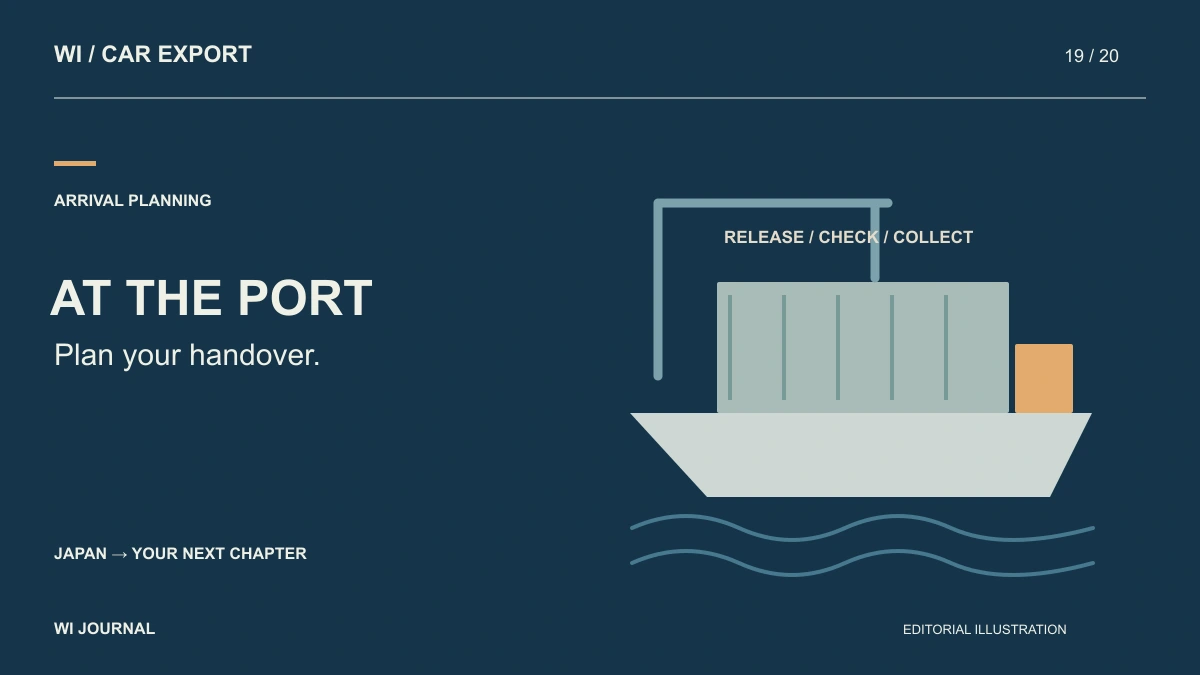
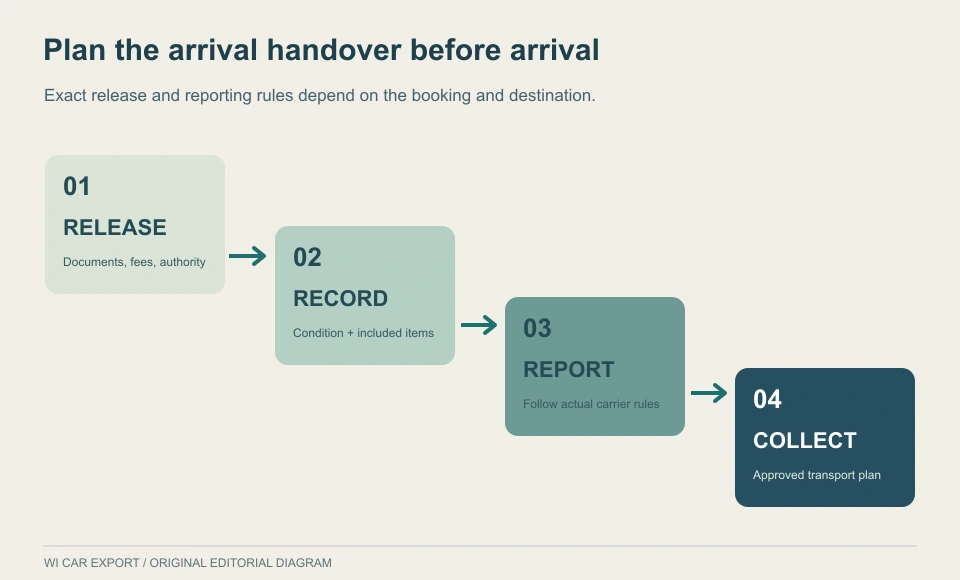
Port collection is a controlled handover, not simply the last drive home. Before going to the terminal, confirm the release method, customs status, local charges, acceptable payment, collection appointment, authorised collector and onward transport. At handover, document condition before signing or moving the car where terminal rules permit. Obtain every deadline from the actual carrier, port or agent—never from a generic timetable.
Build a release sheet from named sources
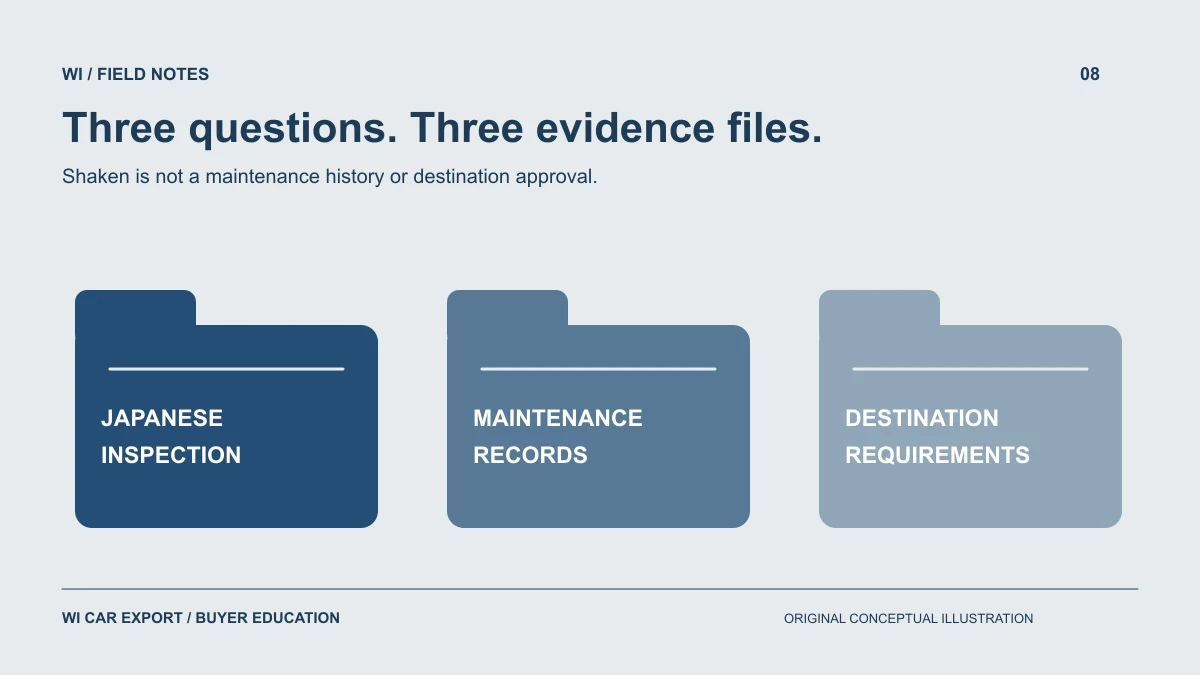
Put the carrier or agent, customs representative and terminal in separate rows. They may have different requirements, offices and payment channels. For each, record a contact name, verified telephone/email route, task, required document, amount due, accepted payment method, deadline and completion evidence.
Carrier guidance illustrates why this must be shipment-specific. Wallenius Wilhelmsen tells private-vehicle customers to have the destination forwarder check applicable local fees, acceptable payment methods and required documents before collection; it also notes that local charges and practices vary by port (Wallenius Wilhelmsen private-vehicle guide). That is guidance for its services, not evidence that WI uses that carrier or that another carrier follows the same process.
Your release sheet should answer:
- Is release based on an original bill of lading, a sea-waybill release, a delivery order or another named document?
- Have freight and destination charges required for release been cleared?
- Has customs or border clearance been completed, and who confirms it?
- Who is the named consignee or authorised collector, and what identification or authority letter is required?
- Is collection appointment-only? Which gate, office and operating hours apply?
- What terminal rules cover visitors, high-visibility clothing, passengers, photography, fuel and jump-start assistance?
- What is the last collection time before storage or other charges may begin?
Wallenius Wilhelmsen’s collection FAQ, for example, says its typical release requires an endorsed original bill of lading or sea-waybill release, charges paid and customs clearance received (carrier collection FAQ). Use that as a prompt to ask your own shipment parties—not as a universal checklist.
Verify charges and deadlines without inventing them
Request a written statement or arrival notice showing each charge, payee, currency, due date and payment route. Independently verify any bank or payment change through a trusted contact channel before sending funds. Keep receipts and the release confirmation accessible offline.
Do not write “you have three days” or any other generic free-time rule into the plan. Ask the actual terminal when its clock starts, what days count, what event stops charges and how an inspection or customs hold affects the position. Record the answer with the person or document that supplied it. Vessel arrival, cargo availability and the collection deadline are different events.
Prepare the collector and onward transport
Give the collector a single handover pack containing shipment reference, vehicle identity, release confirmation, customs evidence, appointment details, contact escalation list and pre-shipment condition images. Confirm whether a spare key is available and how all keys will be transferred.
Decide in advance whether the car will leave on a professional transporter. Use professional transport if the vehicle is not registered, insured, permitted for road use, mechanically road-ready or suitably equipped for the destination. Do not use a successful engine start as proof that it is safe or lawful to drive.
If the plan allows a road departure, the responsible local professional should confirm the legal and safety prerequisites. Arrange fuel or charging only through permitted terminal procedures; do not arrive with unapproved containers, batteries or tools.
Record condition before accepting handover
The collector should compare the car against the pre-shipment evidence before signing. Where terminal rules allow, capture:
- a continuous walk-around with the vehicle and surroundings identifiable;
- close images of every panel, glass, lamp, wheel and visible underside area;
- cabin, odometer, warning lamps, fuel/charge indication and keys;
- any loose items or accessories listed for the vehicle;
- start-up or non-start condition without repeated attempts that could cause damage.
If damage or missing items are found, notify terminal staff immediately and have observations written on the dock receipt, tally or delivery record before signature where the process allows. Do not describe cause or accept liability conclusions you cannot establish; record visible facts, position, time and the people notified.
The same carrier guide recommends inspecting before formal delivery and recording damage on the receipt or dock tally before signing. Its later-notice and claim provisions are carrier-specific, so follow the deadlines and documents in the actual transport contract rather than copying another shipment’s rule (Wallenius Wilhelmsen damage guidance).
Close the handover file
After release, save the signed delivery record, charge receipts, collection photographs, key count, transporter receipt and any incident correspondence together. Note where the vehicle was taken and who received it. If condition concerns exist, preserve originals and follow the insurer’s and carrier’s actual notice process promptly.
Port collection goes smoothly when uncertainty is removed before anyone reaches the gate. The shipment parties supply the rules; your handover file proves that each rule and condition check was addressed.
Contact WI Car Export before shipment with the stock reference and destination so you can ask which export and transport documents will be provided for your vehicle file.
Original WI Car Export editorial illustration, AI-assisted vector design. Not vehicle photography.