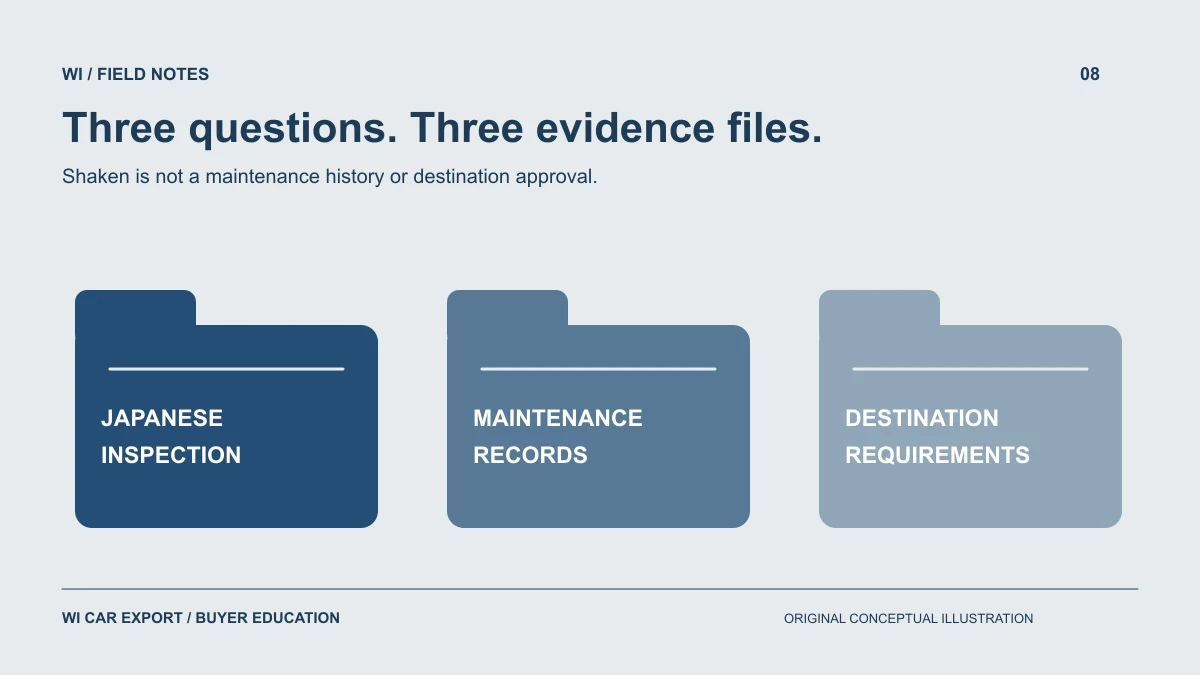

The required pre-shipment inspection for a Japanese used car depends on the destination, vehicle class and current approved provider. It may cover roadworthiness, odometer integrity, radiation, structure or biosecurity. A general condition check is useful, but it cannot replace a certificate mandated by the importing country.
Last updated: 7 August 2026
Choose a vehicle, then request a destination-compliance check
Why is “inspection” not one universal service?
Vehicle buyers use the word for several different checks. Keeping them separate prevents false confidence:
| Inspection type | Main purpose | Who relies on it |
|---|---|---|
| Roadworthiness or conformity | Brakes, steering, lights, suspension and required standards | Destination standards or transport authority |
| Odometer verification | Compare displayed distance with available historical records | Authorities and buyers in designated markets |
| Biosecurity or quarantine | Check for soil, seeds, insects and other contamination | Agriculture and border agencies |
| Radiation inspection | Measure contamination against the applicable threshold | Destinations or carriers that require it |
| Structural inspection | Assess repairs or damage against entry rules | Vehicle-certification authority |
| Buyer condition check | Help the buyer understand cosmetic and mechanical condition | The buyer; usually not a customs certificate |
Which inspections apply in common destinations?
The following examples show why the destination and provider must be confirmed for each order.
Kenya
Kenya’s 2026 PVoC manual states that used vehicles from listed supply countries must undergo inspection before shipment and receive the required conformity evidence. For Japan, the manual identifies the appointed service provider and includes roadworthiness, radiation and odometer-integrity checks. Provider contracts can change, so use the current KEBS publication rather than an old exporter blog.
New Zealand and Australia
Used vehicles entering New Zealand face biosecurity and road-entry requirements. JEVIC states that it is approved by New Zealand’s Ministry for Primary Industries and Australia’s Department of Agriculture, Fisheries and Forestry for relevant quarantine inspections in Japan. New Zealand also requires road certification, and an importable vehicle is not automatically registrable.
Malta, Fiji, Papua New Guinea, Mauritius and Sri Lanka
JEVIC lists odometer inspection for Malta and vehicle-function inspection programmes for Fiji, Papua New Guinea, Mauritius and Sri Lanka. The exact scope, booking process and accepted certificate should be checked against the destination authority before the vehicle is delivered for inspection.
Is a Japanese auction grade enough?
No. An auction sheet records the auction house’s assessment at the time of sale. It can be valuable evidence about condition, repairs and mileage, but it is not the same as a destination government’s pre-export certificate. A vehicle can have a strong auction grade and still fail an age, emissions, biosecurity or technical requirement.
When should the inspection be booked?
Check eligibility before purchase, then book the mandated inspection after the exact chassis is secured and before vessel cut-off. The vehicle needs time to reach the inspection facility. If it fails, repairs and reinspection may be required. Booking the vessel too tightly can cause rollover and storage charges.
What should the buyer verify on the certificate?
- Correct chassis or frame number and vehicle details
- Destination programme and certificate type
- Inspection date and certificate validity period
- Name of the currently approved inspection organisation
- Result, remarks and any limitations
- Online verification method or certificate number, where available
What happens if the vehicle fails?
The outcome depends on the reason and programme. A repairable defect may be corrected and presented for reinspection. Structural, age, identification or prohibited-category problems may make the vehicle unsuitable for that destination. Ask for the failure details and revised costs before authorising work.
How do you avoid paying for the wrong inspection?
- Identify the exact destination country, discharge port and vehicle class.
- Check the current authority page for mandatory inspection and appointed provider.
- Verify vehicle age, steering side and prohibited categories first.
- Place the correct inspection as a separate line on the quotation.
- Keep the certificate with the export certificate, invoice and bill of lading.
How should inspection appear on the quotation?
The quotation should name the destination programme, inspection type and fee as clearly as possible. It should also state whether inland transport to the inspection site, repair work, reinspection and certificate courier costs are included. A single line marked only “inspection” is too vague when several different services exist.
Inspection cost should not be used to hide an ineligible vehicle. First confirm the age, first-registration date, steering side, vehicle class and obvious structural restrictions. Then authorise the required inspection. This order reduces the chance of paying an appointment fee for a car that could never qualify.
Frequently asked questions
Are all Japanese used cars inspected before export?
No. Japan export clearance and destination pre-shipment inspection are different processes. The destination country, vehicle and shipping route determine which extra inspection is required.
Does a passed inspection guarantee registration?
No. It confirms the scope stated on that certificate. Customs, tax, emissions, age, modification and local registration rules can still apply after arrival.
Can I choose any inspection company?
Not for a mandatory government programme. The certificate usually must come from an organisation currently approved or appointed by the destination authority.
Does inspection verify the auction sheet?
Only if the programme explicitly includes the relevant history or odometer checks. Roadworthiness, biosecurity and radiation inspections have different scopes.
Who pays for reinspection?
The commercial agreement decides. Ask the exporter to state inspection, repair, reinspection and transport costs before you approve the order.
Official sources
- Kenya Bureau of Standards: 2026 PVoC Manual
- JEVIC: vehicle inspection services and approvals
- New Zealand Customs: vehicle agency requirements
Confirm compliance before shipping
Send us the stock number, destination country and port. We will identify the export-side inspection to include in your itemised quotation and flag any rule that needs confirmation from your local authority.
Browse inspected-ready Japanese stock