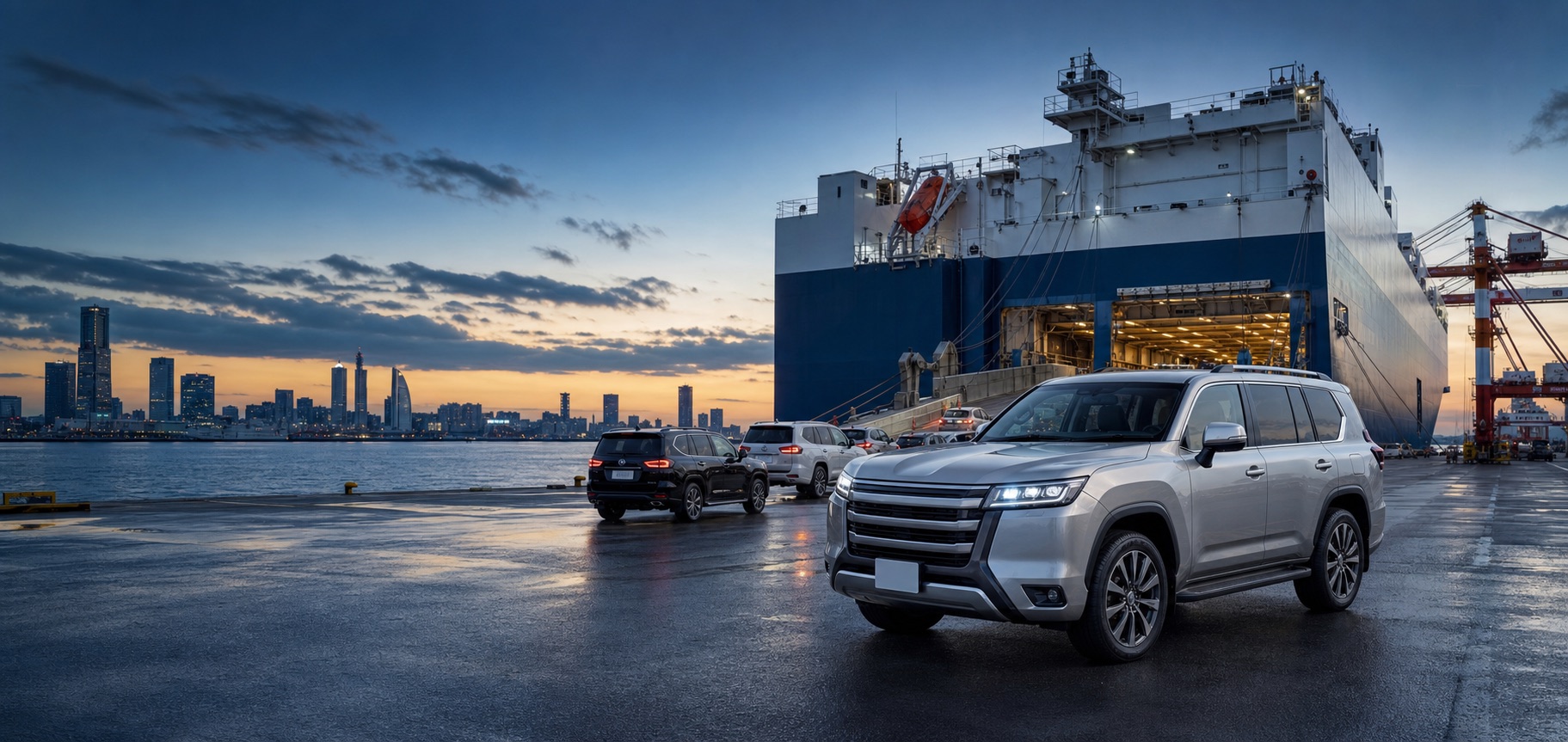

Only 43 of our 171,537 live Japan-stock vehicles are left-hand drive — about 1 in 4,000. Here's why, who buys them, and how to filter for one.
Last updated: August 2026
Left-hand-drive cars from Japan are extremely rare: of 171,537 vehicles in our live Japan stock as of August 2026, only 43 are LHD — about 1 in every 4,000 cars. Almost all of them are premium imports like Ferrari, Rolls-Royce, Porsche, Mercedes G-Class and Maserati, not everyday Japanese-market models.
You can isolate every LHD vehicle in current stock in one click with our steering-side filter, rather than paging through tens of thousands of RHD listings to find them.
How rare are left-hand-drive cars from Japan, exactly?
Rare enough that most buyers never encounter one by accident. Across our full live inventory of 171,537 fixed-price vehicles (wicarexport.com platform data, August 2026), exactly 43 are configured left-hand drive — a ratio of roughly 1 in 4,000. Stock rotates daily as vehicles sell and new listings are added, but the LHD share stays consistently thin, because it isn't driven by ordinary turnover — it's a structural fact of the Japanese domestic market.
Why does Japan have almost no left-hand-drive cars?
Japan drives on the left side of the road, and has done so since the 19th century — a rule shared with the UK, Australia, much of Southeast Asia, and several Caribbean and African nations, as documented in the reference list at worldstandards.eu. Left-hand traffic means the driver's seat sits on the right side of the car for visibility and safety on overtakes. Because virtually every car built for or sold new in Japan is RHD by design, an LHD car in Japan's used-car market didn't start life as a domestic Japanese-market vehicle — it was imported into Japan new, typically as a personal-import or grey-market purchase of a European or American marque, then later resold on the Japanese used-car market where it eventually reaches export stock.
Why are almost all Japan-sourced LHD cars premium brands?
Because the population of LHD cars in Japan is, by definition, the population of cars someone chose to import into a right-hand-drive country despite the inconvenience. That's a self-selecting group skewed heavily toward buyers who wanted a specific marque or model badly enough to accept an LHD car on Japanese roads — collectors and enthusiasts buying Ferrari, Rolls-Royce, Porsche, Mercedes G-Class or Maserati models that were never sold new in RHD form, or where the LHD version was the only or preferred configuration. You will not find an LHD Toyota Corolla or Honda Fit in meaningful numbers, because there was never a market reason to bring one into Japan in the first place.
| Typical LHD marque in our stock | Segment | Why it's LHD |
|---|---|---|
| Ferrari | Supercar / collector | Personal or dealer import, RHD versions rare or nonexistent for some models |
| Rolls-Royce | Ultra-luxury | Often personally imported new by Japanese collectors in LHD spec |
| Porsche | Sports / performance | Grey-market and personal imports alongside official RHD sales |
| Mercedes-Benz G-Class | Luxury SUV | Certain special editions imported in LHD configuration |
| Maserati | Luxury GT | Limited-run imports, often LHD-only production for specific models |
Who actually buys LHD cars sourced from Japan?
Three buyer profiles show up consistently:
- Collectors and enthusiasts worldwide, who care more about condition, mileage and Japan's meticulous maintenance culture than about steering side, and are often searching specifically for a low-mileage, well-documented example of a marque like Ferrari or Porsche.
- Buyers in LHD-market countries across the Caucasus and former Soviet region — Georgia is a notable hub, having banned new right-hand-drive registrations in 2018 and shifted decisively toward LHD-only imports, a shift covered by regional outlets including OC Media.
- Buyers in Gulf and African LHD countries, where premium Japan-sourced vehicles compete with cars sourced from other origin markets, but stand out on condition and documented history.
Does an LHD car from Japan cost more or less?
More, as a rule — because the pool is almost entirely premium and collector-grade vehicles, not because LHD configuration itself commands a premium. You're not comparing an LHD Corolla to an RHD Corolla; you're comparing a Ferrari to the rest of the market. Expect LHD listings to sit in a materially higher price bracket than the median vehicle in our stock, reflecting the brands that make up nearly all of the 43 available.
How do I search for LHD cars in your stock?
Use the steering-side filter on our Japan stock page — it isolates the LHD subset instantly, so you're browsing 43 vehicles instead of 171,537. Given how few there are, we'd suggest checking back periodically or requesting more photos and details the moment something matches what you're after, since individual LHD listings don't stay live long.
What should you check before buying an LHD import from Japan?
The same fundamentals as any Japan-sourced vehicle, arguably with more weight given the price bracket involved. Every fixed-price listing carries its original auction sheet, and the details on that sheet matter even more on a six- or seven-figure collector car than on an everyday sedan: the overall grade, the interior letter grade, and — critically — the 修復歴 (repair-history) box, which flags whether a structural component has ever been repaired or replaced. A premium marque with a clean grade and no repair-history flag, backed by a documented service book, is a materially different purchase from the same model with an R or RA grade, even if both look identical in photos. Our free "Scan sheet & translate to English" tool applies to LHD listings exactly as it does to the rest of our stock, so you can check provenance before committing.
Does Japan's meticulous car culture apply to LHD imports too?
Generally, yes. A car imported into Japan by a collector or enthusiast tends to receive the same attentive ownership as a domestic Japanese-market vehicle — often more so, given the cost and effort involved in bringing it into the country in the first place. That means many of the reasons buyers trust Japan-sourced vehicles in general — documented maintenance, careful storage, low accumulated wear — apply just as strongly to the LHD subset, even though these cars didn't start life as Japanese-market models.
Frequently asked questions
What percentage of Japanese used cars are left-hand drive?
An extremely small share. In our live stock, LHD vehicles account for roughly 0.025% of listings — about 1 in every 4,000 cars (wicarexport.com platform data, August 2026).
Can I buy an ordinary LHD sedan sourced from Japan?
It's very unlikely. Japan's LHD population is dominated by premium and collector marques imported for their own sake, not everyday models. If you need a standard LHD sedan, an RHD Japanese-market car may not be your best source.
Why would anyone buy an LHD car from a right-hand-drive country?
Because Japan's used-car market offers exceptionally well-documented condition history and maintenance records, even for imported premium vehicles. Buyers value that documentation enough to look past the fact that the car started life as an import into Japan.
Are LHD cars from Japan legal to import into my country?
That depends entirely on your destination country's rules, which vary widely. Always confirm registration and import eligibility for LHD vehicles with your local authority before purchasing.
How often does new LHD stock appear?
Irregularly — stock rotates daily across our full inventory, but LHD listings are a small, slow-moving subset. Checking the filter regularly is more effective than expecting steady turnover.
Find one of the 43
LHD cars from Japan aren't a category so much as a curated accident of premium imports — which is exactly why they're worth a look if you collect or need one. Use our left-hand-drive filter to see what's currently available, and if you'd rather understand grade and condition before you commit, read our guide on how to buy a car directly from Japan, step by step.