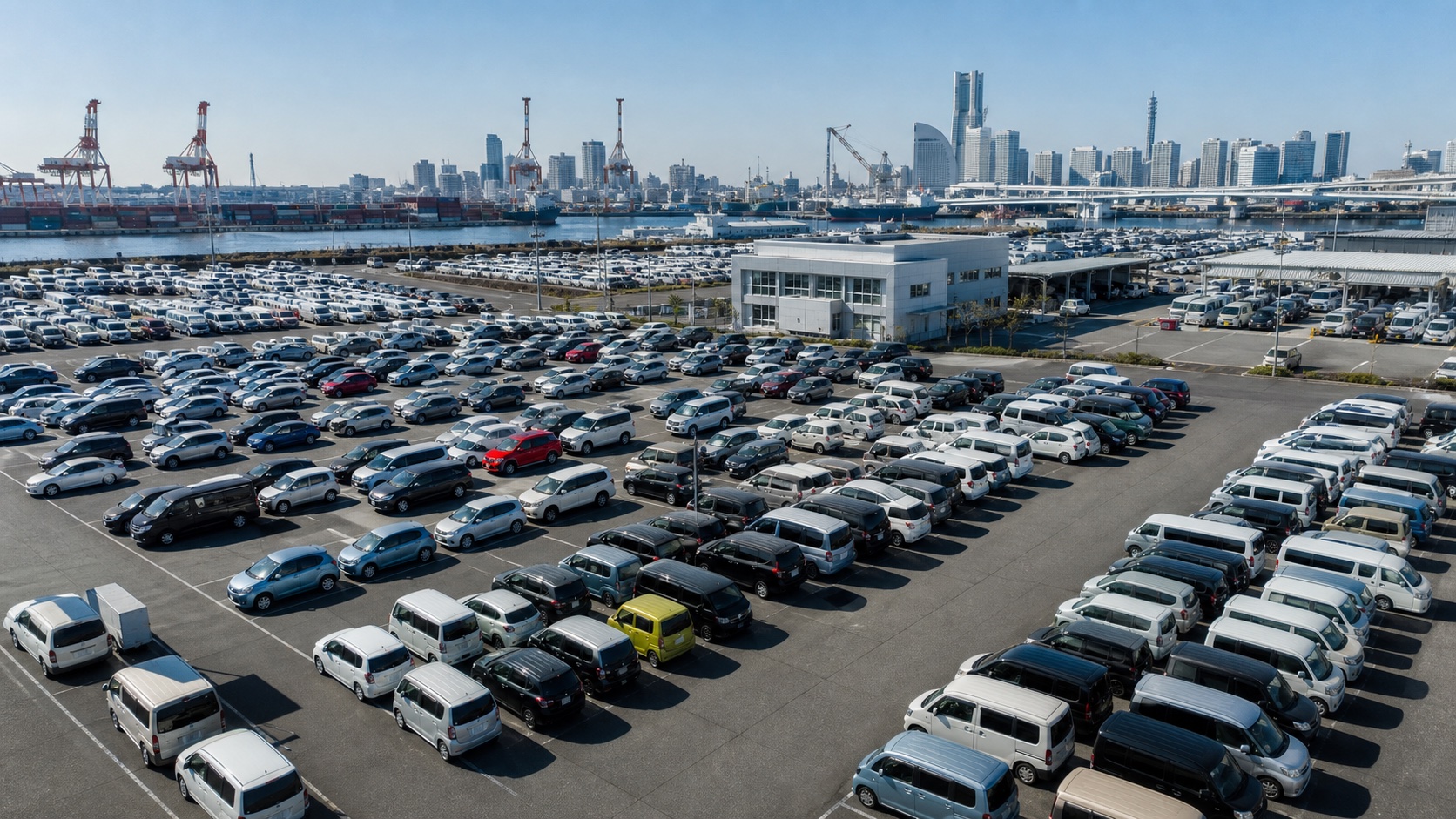
The most available Japanese used cars for export in WI Car Export’s live fixed-price inventory on 7 August 2026 included the Honda N-Box, Toyota Prius, Toyota Alphard, Toyota Aqua and Nissan Serena. Availability improves choice, but the best vehicle still depends on destination rules, parts support and intended use.
Last updated: 7 August 2026
Search the live inventory—the counts update continuously
Which Japanese used cars had the most live stock?
WI Car Export queried its live fixed-price Japan inventory on 7 August 2026. The table shows the 15 largest model pools across five high-volume Japanese makes at that moment.
| Rank | Make and model | Live vehicles | Vehicle type |
|---|---|---|---|
| 1 | Honda N-Box | 4,429 | Kei tall wagon |
| 2 | Toyota Prius | 3,304 | Hybrid hatchback |
| 3 | Toyota Alphard | 2,912 | Premium minivan |
| 4 | Toyota Aqua | 2,714 | Compact hybrid |
| 5 | Nissan Serena | 2,586 | Family minivan |
| 6 | Toyota Voxy | 2,577 | Family minivan |
| 7 | Suzuki Hustler | 1,894 | Kei crossover |
| 8 | Nissan Note | 1,875 | Compact hatchback |
| 9 | Suzuki Wagon R | 1,846 | Kei wagon |
| 10 | Toyota Harrier | 1,840 | Mid-size SUV |
| 11 | Toyota Sienta | 1,838 | Compact MPV |
| 12 | Toyota Hiace Van | 1,816 | Commercial van |
| 13 | Honda Fit | 1,642 | Compact hatchback |
| 14 | Suzuki Spacia | 1,615 | Kei tall wagon |
| 15 | Toyota Noah | 1,612 | Family minivan |
Methodology: counts came from WI Car Export’s live provider-backed fixed-price inventory, not the retired local listings database. Duplicate model names were not manually merged, and inventory changes throughout the day as vehicles enter or leave stock.
Why does high availability help an importer?
A deep model pool improves comparison. Instead of accepting the first suitable-looking car, a buyer can compare year, mileage, grade, colour, drivetrain, equipment and price. High availability may also make it easier to reject a questionable example because alternatives exist.
Availability is especially useful for dealers who want repeatable specifications. A model with hundreds or thousands of live units can support a consistent buying rule—for example, a defined age band, maximum mileage and minimum grade—without depending on one rare listing.
Why is the most available car not always the best export?
Japan’s domestic demand shapes the inventory. Kei cars such as the N-Box, Wagon R and Spacia are extremely common in Japan, but some destination markets have limited parts support, different road conditions or tax rules that reduce their appeal. Likewise, hybrids can offer excellent fuel economy while requiring local battery knowledge and compatible diagnostics.
Which high-supply models suit common buyer needs?
| Buyer need | High-supply models to compare | Check before buying |
|---|---|---|
| Urban fuel economy | Toyota Aqua, Toyota Prius, Nissan Note, Honda Fit | Hybrid system, battery evidence, ground clearance and local diagnostics |
| Family seating | Toyota Alphard, Nissan Serena, Toyota Voxy, Toyota Noah | Seat layout, sliding doors, engine size and destination taxes |
| Compact city use | Honda N-Box, Suzuki Wagon R, Suzuki Spacia, Suzuki Hustler | Kei-engine suitability, parts and safety expectations |
| Commercial work | Toyota Hiace Van | Payload, body dimensions, diesel rules and commercial import class |
| SUV preference | Toyota Harrier | Drivetrain, tyre size, clearance and local parts costs |
What is the WI Market-Fit score?
Use five checks to turn a stock count into a shortlist. Score each from one to five:
- Eligibility: age, steering side, emissions and import class.
- Local support: parts, technicians, diagnostics and consumables.
- Operating fit: fuel, road surface, ground clearance, passengers and cargo.
- Supply depth: enough comparable cars to reject weak condition or poor value.
- Landed economics: purchase, freight, duty, tax, clearance and first maintenance.
A model with slightly lower supply can be the stronger purchase if it scores higher for local support and landed economics.
What does the live stock mix reveal?
The snapshot shows strong depth in four practical segments: efficient compact cars, high-roof kei cars, family minivans and hybrids. It also shows that “Japanese used car” is not one uniform product. A dealer focused on urban buyers will read the N-Box, Aqua and Fit counts differently from an operator seeking Hiace vans or a family buyer comparing Serena, Voxy and Noah.
Model naming also needs care. Provider data can separate close variants or generations under different names, so the count for a broad family may be larger than one displayed row. Use the live make and model filters to see current listings, then confirm chassis code, engine, drivetrain and grade on the individual vehicle page.
How should you compare two vehicles from the same model?
Start with non-negotiable destination rules. Then compare total landed estimate, registration date, mileage evidence, auction or inspection information, repair history, underbody condition, tyres, keys, equipment and photo coverage. A cheaper car with weak evidence or immediate maintenance can cost more after arrival.
Frequently asked questions
What is the most available Japanese used car right now?
Honda N-Box led this WI Car Export snapshot with 4,429 live fixed-price vehicles on 7 August 2026. The live ranking changes as stock is added and sold.
Are Toyota hybrids easy to find in Japan?
Yes. The snapshot included 3,304 Toyota Prius and 2,714 Toyota Aqua vehicles, giving buyers a wide range of years, mileages and specifications to compare.
Does more stock mean a lower price?
Not automatically. Supply improves comparison, while price still reflects year, mileage, grade, condition, specification, demand and seller expectations.
Are kei cars suitable for export?
They can be excellent for efficient urban use, but buyers should check destination eligibility, local parts, engine expectations, road conditions and resale demand.
How often does WI Car Export’s inventory update?
The storefront queries the provider’s live fixed-price stock rather than relying on a periodic local bulk import. Counts and individual availability can therefore change throughout the day.
Data sources
- WI Car Export live fixed-price Japanese stock
- Japan Customs: official trade statistics information
- WI destination cost planner
Turn live supply into a shortlist
Filter by make, model, year, mileage and price, then send the stock number with your destination port. We will prepare an itemised quote so you can compare the vehicle and shipping cost together.
Explore all 147,000+ live vehicles