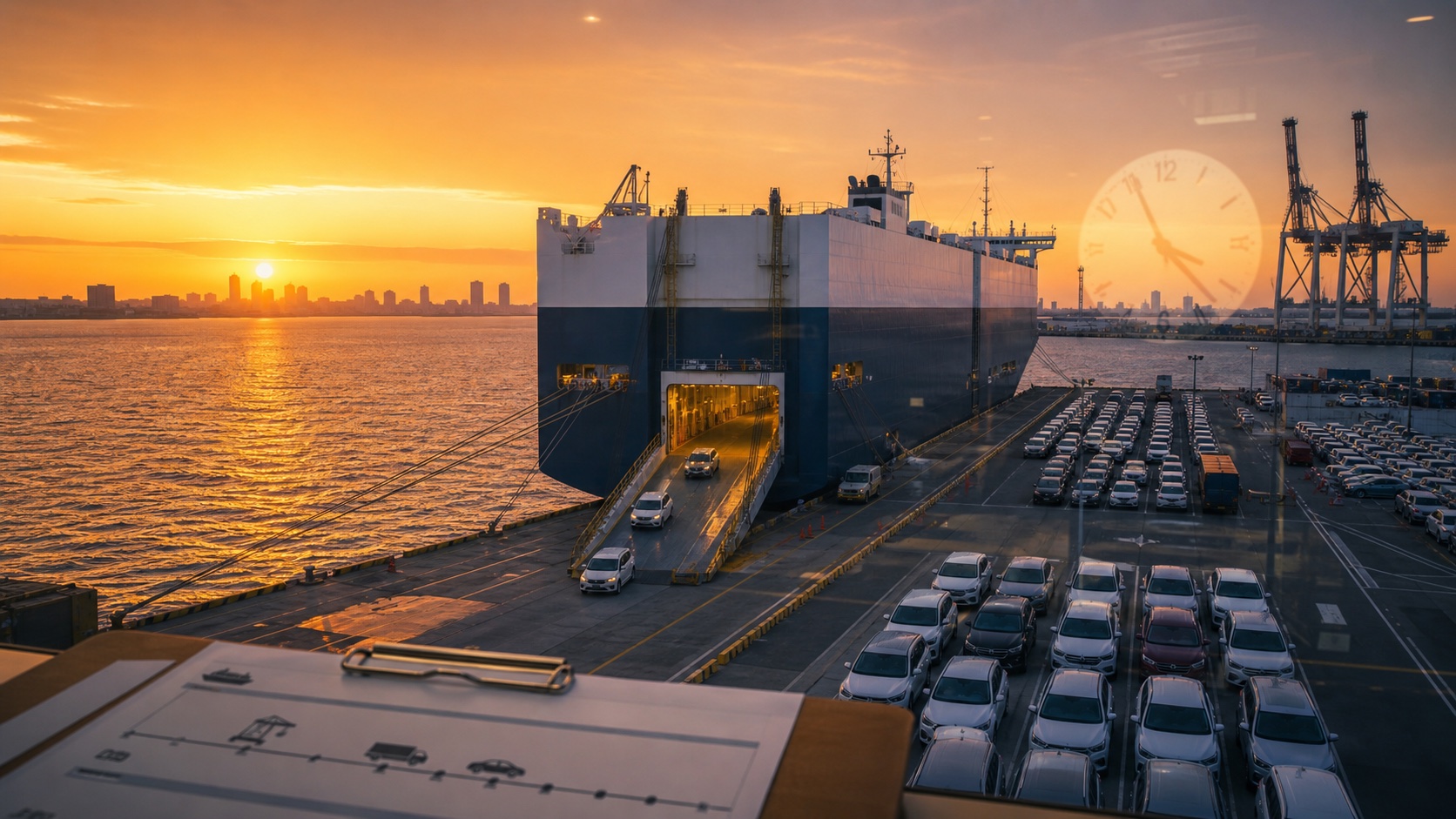
Shipping a car from Japan usually takes about two to six weeks at sea, but the complete purchase-to-collection journey often takes four to ten weeks or more. Booking space, inland transport, inspections, export paperwork, transhipment and destination clearance all affect the final date.
Last updated: 7 August 2026
Plan your destination and request an itemised shipping quote
What stages make up the total shipping time?
| Stage | Typical planning allowance | What can change it |
|---|---|---|
| Payment confirmation | 1–3 business days | Bank, currency and compliance checks |
| Vehicle transfer and preparation | 3–10 days | Stockyard location, cleaning, repairs or documentation |
| Inspection, if required | Several days to 2 weeks | Appointment availability, failure or reinspection |
| Vessel booking and cut-off | 1–3 weeks | Route frequency and available RoRo or container space |
| Sea transit | 2–6 weeks | Distance, port calls and transhipment |
| Destination clearance | 2 days to 2+ weeks | Documents, customs, port congestion and local payment |
These stages can overlap, so adding every maximum together would exaggerate a normal journey. They are most useful for identifying where a shipment is waiting and what the buyer can prepare in advance.
How long is the sea journey by region?
Use the following broad ranges only for early planning. A current carrier schedule and vehicle-specific booking are more reliable than any static table.
| Region | Indicative port-to-port range | Common route factor |
|---|---|---|
| East and Southern Africa | 3–6 weeks | Multiple port calls and high seasonal demand |
| Caribbean | 4–7 weeks | Transhipment is common on some islands |
| Oceania | 2–4 weeks | Biosecurity and inspection timing matter |
| Europe and United Kingdom | 5–8 weeks | Long voyage and several scheduled calls |
| North America | 2–6 weeks | West Coast is generally shorter than East or Gulf routes |
When does the shipping clock really start?
Buyers often start counting on the payment date, while a carrier’s transit time starts when the vessel departs Japan. Between those dates, the vehicle may need inland transport, cleaning, inspection, export deregistration and delivery before the vessel cut-off. Ask for both the expected booking window and the port-to-port transit.
Why can a car miss its planned vessel?
- The vehicle or final documents reach the port after cut-off
- The required inspection is not complete or the vehicle needs reinspection
- The carrier has no remaining space for the vehicle’s dimensions
- A vessel changes rotation, skips a port or is delayed
- Payment, consignee details or an import permit are incomplete
- Weather, congestion or operational restrictions affect the terminal
“Rollover” means the vehicle moves to the next suitable sailing. It is frustrating, but it does not mean the vehicle is lost. A responsible exporter should communicate the revised booking and update the ETD and ETA.
Is RoRo faster than container shipping?
Not automatically. RoRo is often the simplest and most economical option for a running standard vehicle, but speed depends on the actual route and available space. A container can leave sooner on one route and take longer on another, especially when consolidation, loading or transhipment is required. Compare current sailings, not the method name alone.
How can the buyer prevent avoidable delays?
- Confirm that the vehicle is eligible for the destination before purchase.
- Use the exact consignee name and destination port from the first quotation.
- Send identity, tax and import-permit details promptly.
- Review the invoice and draft bill of lading immediately.
- Appoint a clearing agent before the vessel arrives.
- Prepare destination duties, port charges and insurance funds in advance.
Which shipping dates should you track?
Keep six dates in one record: payment confirmed, vehicle received at export yard, inspection passed, booking confirmed, ETD and ETA. After departure, use the carrier’s vessel tracking or schedule updates. ETA can change during the voyage; your broker should plan against the latest notice, not the original estimate alone.
What happens between ETA and collecting the car?
ETA is the vessel’s expected arrival, not the guaranteed collection date. The ship must berth and discharge the vehicle, the carrier must release cargo, and customs and other border agencies must complete their steps. Your clearing agent may need the original or electronic release, export certificate, invoice, inspection certificate and proof that destination charges have been paid.
Ask the agent about free storage time before arrival. If documents or funds are late, port storage or demurrage can turn a short delay into an avoidable cost. A good handover is simple: the exporter shares document copies and voyage details early, while the buyer finishes local permits, taxes and agent arrangements before the vessel reaches port.
Frequently asked questions
How soon after payment will my car leave Japan?
A practical planning range is one to four weeks, depending on vehicle location, inspection requirements, documentation, route frequency and vessel space. The confirmed booking gives the first meaningful ETD.
Can I track the ship carrying my car?
Yes. After booking or departure, the exporter can provide the vessel name and voyage number. Carrier schedules and vessel-tracking services then show progress, subject to reporting delays.
What is the difference between ETD and ETA?
ETD is the estimated time of departure from the loading port. ETA is the estimated time of arrival at the destination port. Both can change.
Does customs clearance count as shipping time?
It is not sea transit, but it is part of the buyer’s total wait. Incomplete documents, unpaid charges, inspections or congestion can extend time at the destination port.
Will a direct vessel always be faster?
Usually a direct sailing reduces handling and transhipment risk, but an earlier connecting service can sometimes arrive first. Compare the complete published schedule.
Sources
- K Line RoRo Services: used cars and equipment
- WI Car Export buyer process
- RoRo vs container shipping guide
Get a route-specific estimate
Select a vehicle and tell us your destination country and port. We will prepare an itemised quotation using the suitable available shipping route—without hiding export costs inside a vague total.
Choose a vehicle and request a quote