Kei or compact? Compare space, routes, import eligibility, workshop support and real ownership costs before choosing a Japanese used car.
A kei car can be a sensible Japanese import when parking space, short trips and a small household define the job. A larger compact car deserves equal consideration when people, luggage or longer journeys need more room. Neither category guarantees low running costs: destination eligibility, the exact vehicle and local workshop support should decide the shortlist.
This is a research-based buying framework, not a road test or a ranking of particular models. WI Car Export sells Japanese used vehicles; the aim here is to help you choose a suitable category before browsing individual cars.
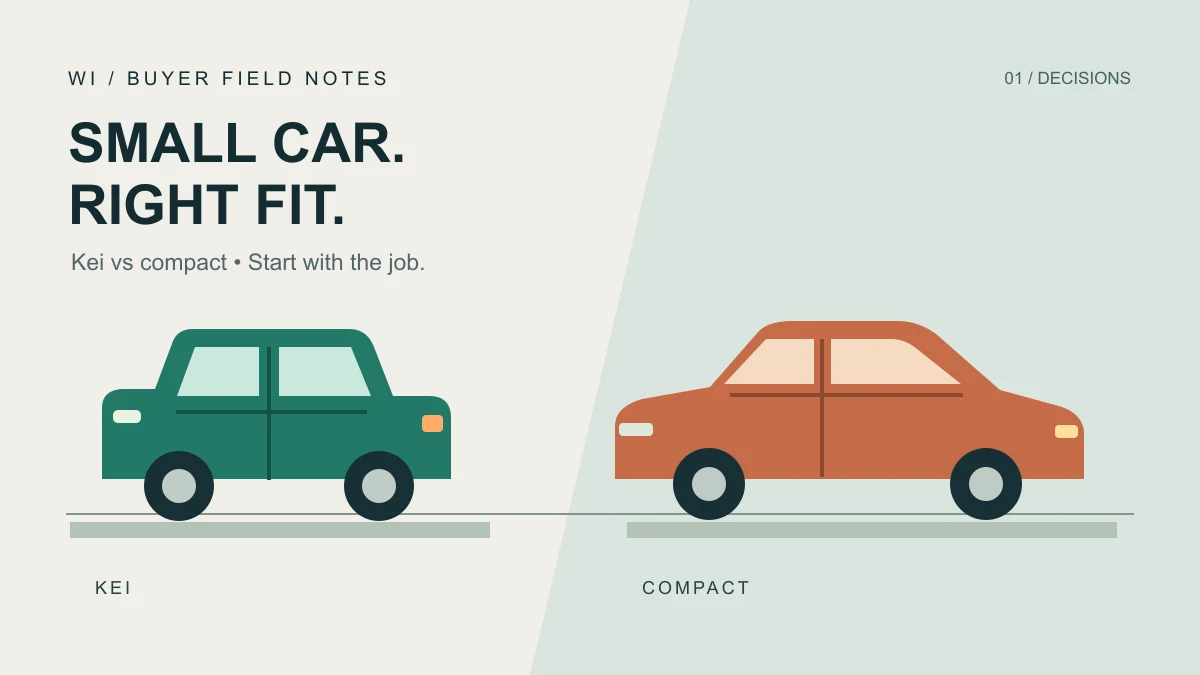
What is a kei car, and how is a compact car different?
“Kei” is a Japanese vehicle classification, not simply another word for a small hatchback. The modern limits shown by Japan’s Light Motor Vehicle Inspection Organization are 3.40 metres long, 1.48 metres wide and 2.00 metres high, with a 660 cc combustion-engine displacement ceiling. The organization also shows earlier standards, so do not apply the modern dimensions to every historic vehicle. Source: official kei vehicle classification.
In this guide, “compact car” means a small passenger car outside the kei class, not a separate legal import category. A kei badge does not establish registration eligibility, taxes or permitted use in your country. Resolve those questions locally before paying a deposit; our guide to Japanese import age limits explains why the date and destination matter.
Use five gates, not a “kei is cheaper” rule
Treat the first four gates below as requirements. Compare costs only after a car passes them. A bargain that cannot be registered or repaired locally is not a useful alternative.
| Decision gate | What to establish | Evidence to collect |
|---|---|---|
| Destination | The exact vehicle is eligible for your intended registration and use | Written guidance from the relevant authority or a qualified local importer, tied to the vehicle details |
| People and luggage | Approved seating and usable space meet your normal trip, not just an occasional solo drive | Registration details, interior measurements and a representative luggage or child-seat fit check |
| Route | The particular engine, transmission and condition suit the routes and loads you expect | Exact variant specifications and an independent assessment; do not infer performance from body shape |
| Local support | A workshop can identify, diagnose and obtain parts for that specification | Workshop confirmation using the chassis/model code and a sample parts enquiry |
| Total ownership cost | Purchase savings survive the costs of getting and keeping the car usable | Comparable landed quotations plus locally checked recurring costs |
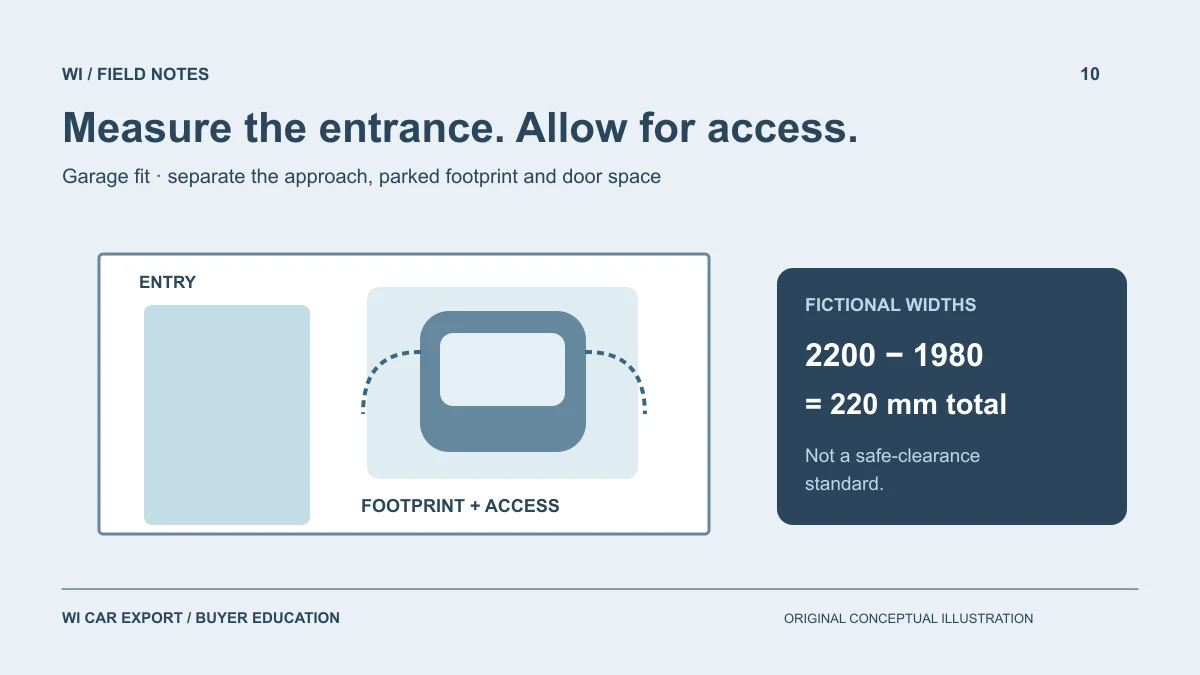
A tall-looking body can be appealing without answering the seating question. Likewise, the word “compact” does not prove that a car has the boot space you need. Record actual dimensions and approved capacity instead of relying on photographs.
Which category should you investigate first?
Start with kei candidates if your must-haves centre on a constrained parking space, a small passenger load and trips for which the specific vehicle has been assessed as suitable. Start with non-kei compact candidates if the kei examples you inspect fail your space, load or route requirements. These are shortlist preferences, not promises about comfort or performance.
If neither category accommodates the family, widen the search rather than stretching a small car’s role. The MPV versus SUV buying checklist uses a different space-and-access brief.
A small fuel saving can be outweighed elsewhere
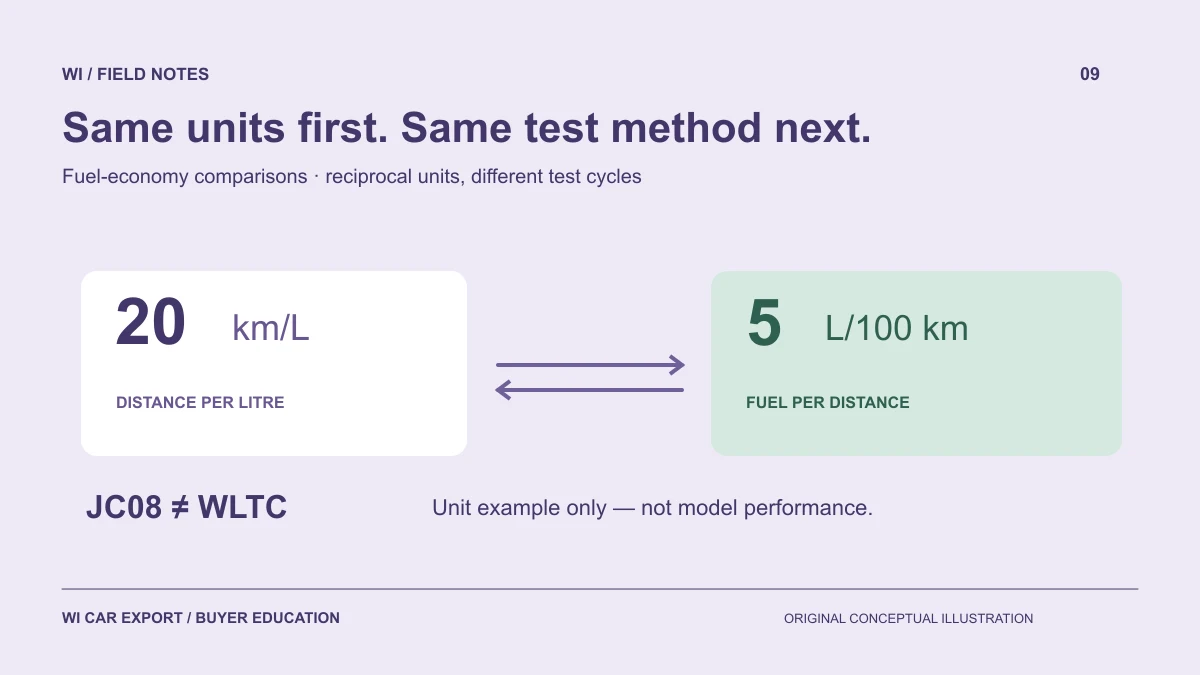
Consider this fictional budgeting example, not measured fuel consumption for any model:
- Annual distance: 10,000 km.
- Candidate A consumption assumption: 5 litres per 100 km.
- Candidate B consumption assumption: 6 litres per 100 km.
- Fuel price assumption: USD 1.50 per litre.
The assumed annual fuel saving is 10,000 ÷ 100 × (6 − 5) × USD 1.50 = USD 150. If Candidate A has USD 300 more in annual costs elsewhere, it costs USD 150 more overall despite using less fuel in the example.
Replace every assumption with relevant local information. Obtain insurance and service estimates for the exact vehicles, and separate one-off import costs from annual spending. Do not carry Japanese ownership-cost assumptions into an overseas budget.
The useful question to send a workshop
Instead of asking “Do you service Japanese small cars?”, send the chassis/model code, production details and engine/transmission information. Ask whether the workshop can identify service parts, access suitable diagnostic information and support that variant. Our parts and workshop support guide provides a fuller enquiry checklist.
Your next step: write down three non-negotiable requirements, then browse Japanese cars in stock and compare one kei candidate with one non-kei compact that passes them. Keep the stock references beside your evidence. Choose the car that fits the job, not the category with the most attractive reputation.
Illustration: original WI Car Export editorial artwork, created with AI assistance. Conceptual, not a vehicle photograph or technical inspection diagram.