Kenya's 8-year rule, RHD requirement, QISJ/JEVIC inspection costs and Mombasa freight rates — a complete 2026 cost breakdown for importing from Japan.
Last updated: August 2026
Importing a car from Japan to Kenya means buying a right-hand-drive vehicle first registered within the last 8 years, passing pre-export inspection, and shipping RoRo to Mombasa. Budget roughly US$155–250 for inspection, around US$1,000 for freight, plus KRA duties assessed locally on the vehicle's value.
Start by browsing our live Japan stock, where every listing shows the registration date and grade you'll need to confirm eligibility before you buy.
What is Kenya's 8-year rule?
Kenya restricts imports to vehicles first registered within eight years of the import date, under the Kenya Bureau of Standards' (KEBS) KS 1515:2000 code of practice for vehicle inspection. As of January 2026, KEBS is enforcing this more strictly: only right-hand-drive vehicles first registered from 2019 onward are being cleared for import. This isn't a new law — it's stricter enforcement of a standard that has existed for years, aimed at keeping older, higher-emission vehicles out of the fleet. Because the cutoff moves forward every year, always check the exact registration date on the vehicle's auction sheet (not just its model year) against the current rule before you commit to a purchase.
Does the car have to be right-hand drive?
Yes. Kenya drives on the left, so RHD is a legal requirement for importation, not a preference. This actually works in your favor buying from Japan: the entire domestic Japanese fleet is RHD, so sourcing an eligible car is straightforward — you don't need to search for a converted or specially imported unit.
What is the pre-export inspection, and what does it cost?
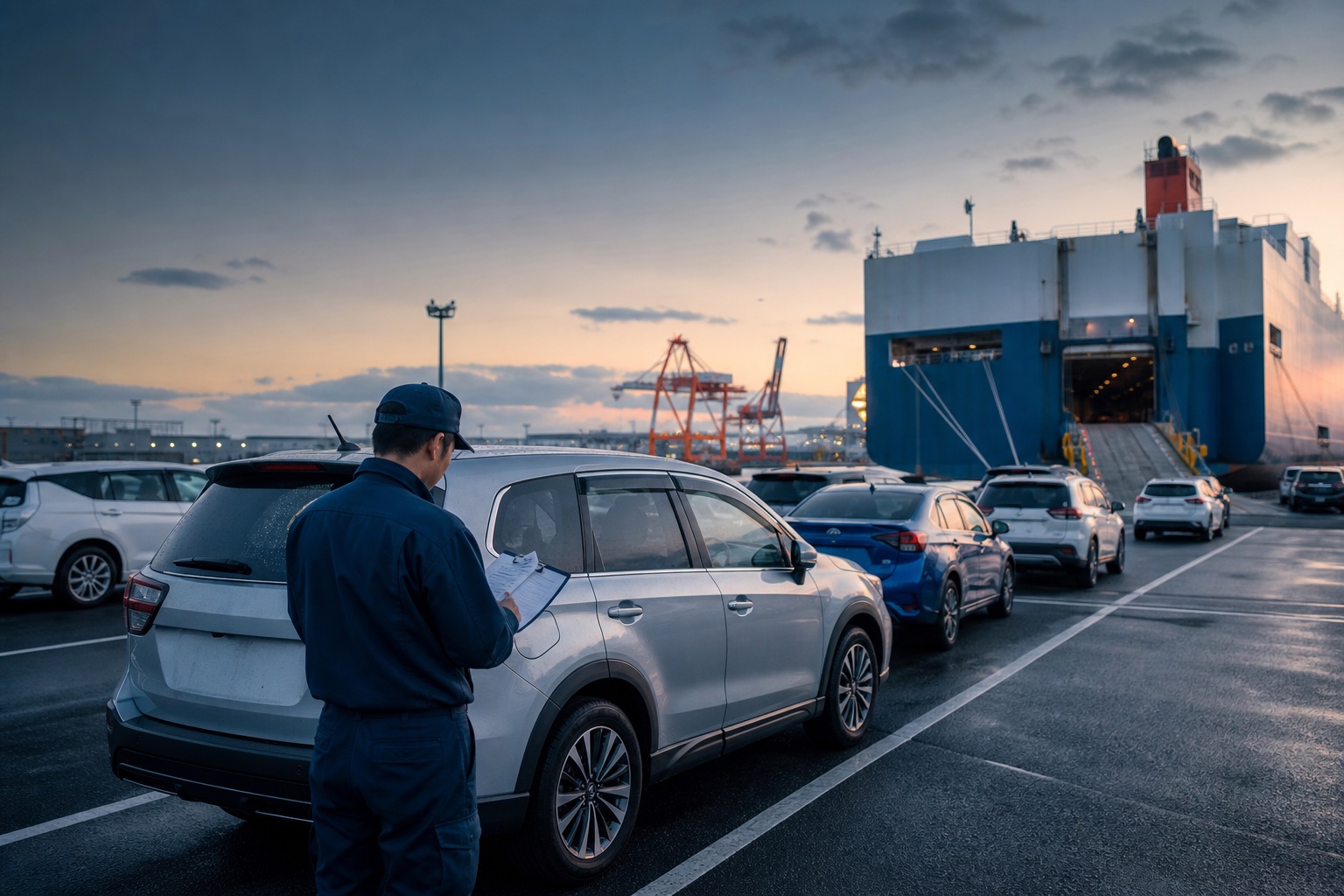
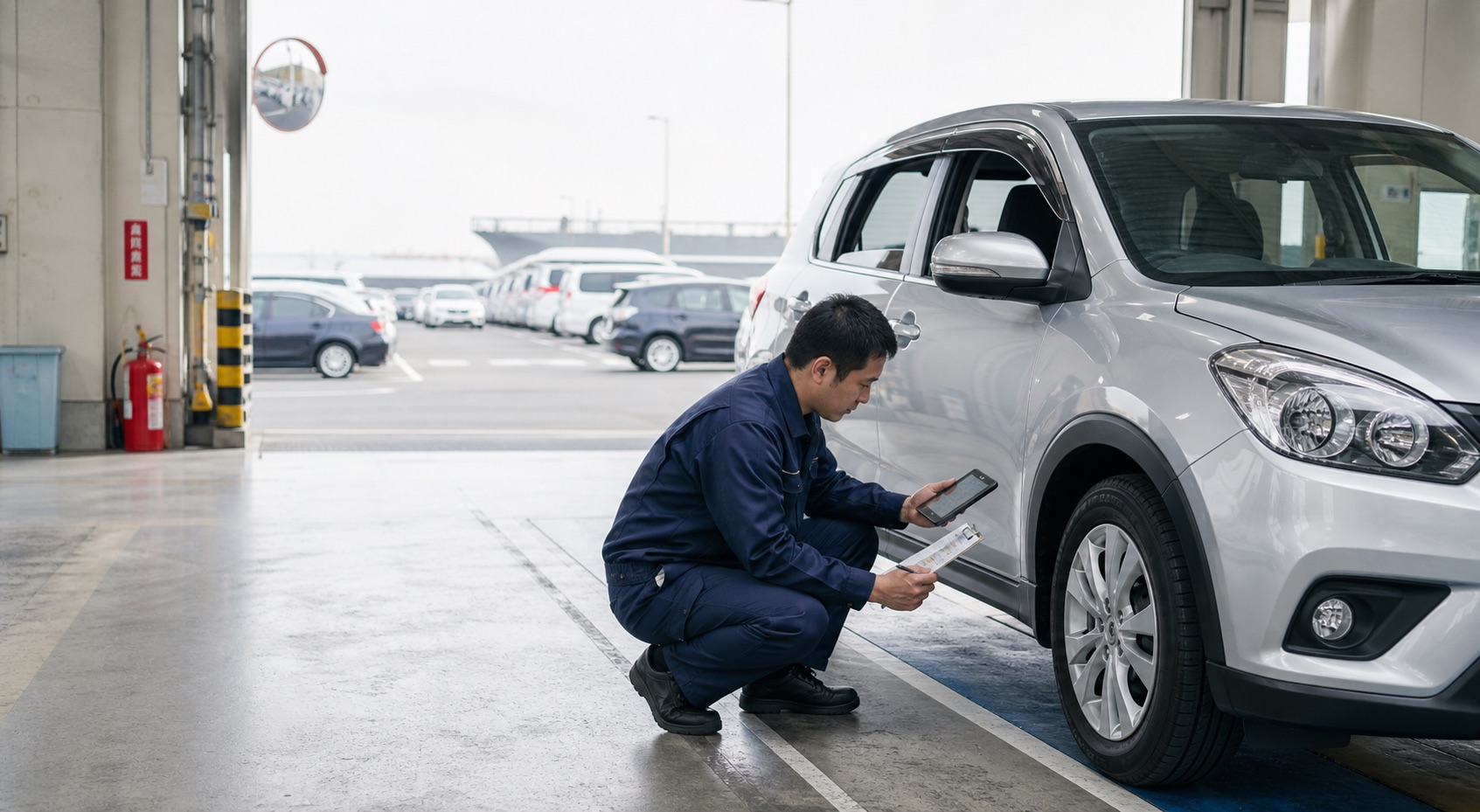
Kenya requires a mandatory pre-shipment roadworthiness inspection before the vehicle leaves Japan, carried out by a KEBS-approved inspection body. The two most commonly used are:
- QISJ (Quality Inspection Services Japan) — approximately US$155 per vehicle inspected in Japan.
- JEVIC (Japan Export Vehicle Inspection Center) — approximately US$250 per vehicle inspected in Japan; fees differ slightly if inspected at other approved overseas locations.
Both issue a Certificate of Roadworthiness that KEBS requires at the Kenyan border. Skipping this step isn't an option — a car without a valid certificate will not clear customs at Mombasa.
What does shipping to Mombasa cost and how long does it take?
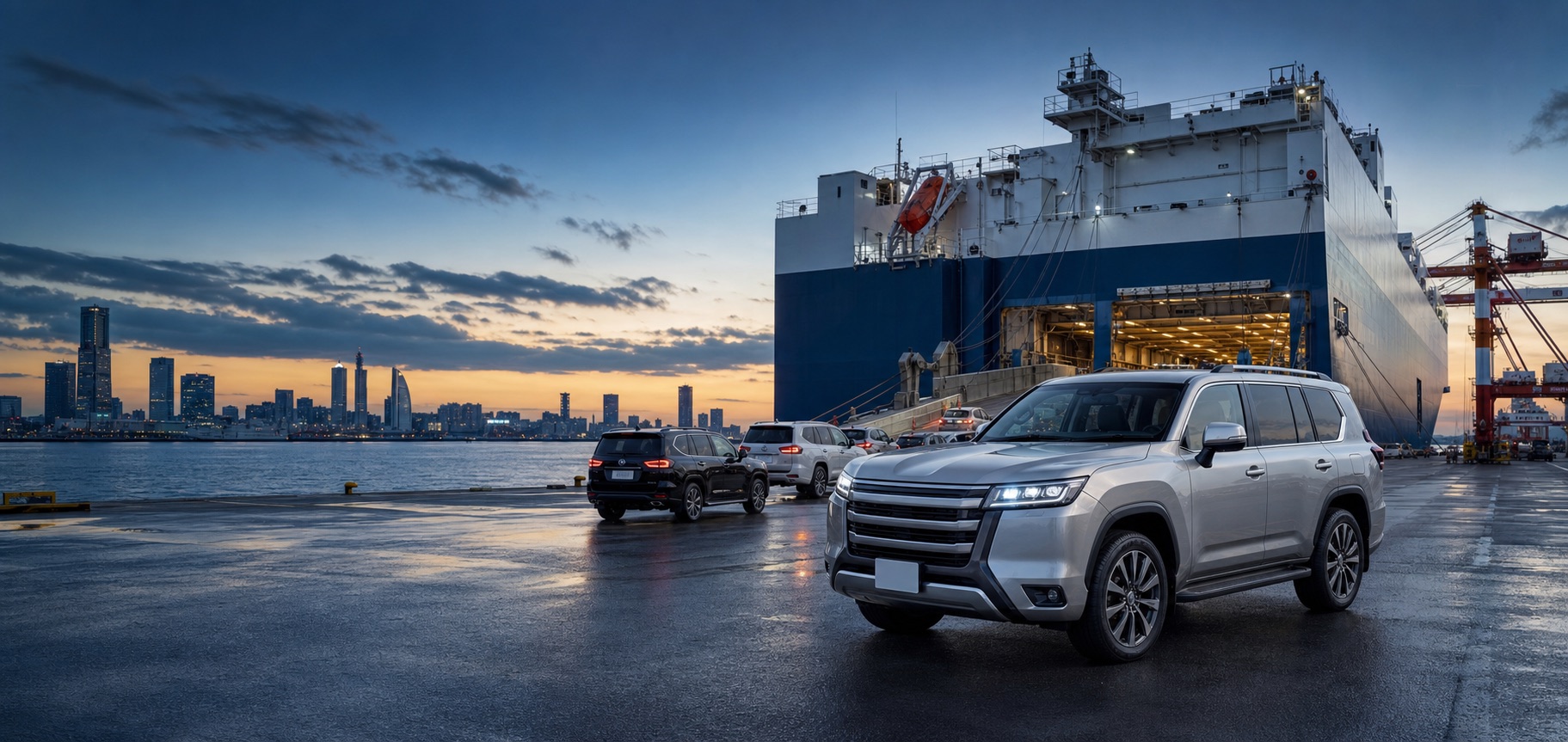
RoRo (roll-on/roll-off) freight from Japan to Mombasa runs around US$1,000 per standard car on our current rate card, and transit is typically 4–6 weeks depending on sailing schedules and port congestion. RoRo is the standard method for Kenya-bound imports because it avoids container-loading costs and suits the RHD sedans, SUVs and light commercial vehicles that make up most of the trade.
What does the full cost picture look like?
Here's how the major cost components break down for a typical import. Duties are assessed locally by KRA on the vehicle's depreciated Current Retail Selling Price (CRSP) and vary by engine size, age and vehicle type, so we've left that line for you to confirm rather than guess at.
| Cost item | Typical range | Notes |
|---|---|---|
| Vehicle FOB price | Varies by model | Set by the listing; see live stock for current pricing |
| Pre-export inspection (QISJ/JEVIC) | ~US$155–250 | Mandatory; issued before the car leaves Japan |
| Marine insurance | 1.5% of car price | Optional but strongly recommended for ocean transit |
| RoRo freight to Mombasa | ~US$1,000 | Per standard car, current rate card |
| KRA import duty, excise duty, VAT | Assessed locally on CRSP | Depends on engine size, age and category — confirm via KRA or our quote form |
| Port and clearing charges | Assessed locally | Handled by your clearing agent at Mombasa |
Because the KRA duty component depends on your exact vehicle and changes with published CRSP updates, we recommend requesting a landed-cost estimate through our quote form once you've picked a car — it accounts for the vehicle's specific CRSP category rather than a generic rate.
Which models are popular for the Kenyan market?
Certain Toyota models dominate Kenya-bound shipments because parts availability, fuel economy and resale value are well understood locally:
- Toyota Probox — a compact wagon widely used commercially for its low running costs.
- Toyota Fielder — a practical family wagon with strong resale demand.
- Toyota Vitz — a small hatchback popular for city driving and fuel economy.
- Toyota Harrier — a mid-size SUV favored for comfort and status.
- Toyota Prado — a larger SUV suited to both urban and upcountry driving.
All five are readily available as RHD Japanese-market vehicles, which simplifies both the inspection and import process.
How does payment and reservation actually work?
Once you've picked a vehicle, a 10% deposit reserves it while you finalize inspection and shipping arrangements — this stops another buyer from purchasing the same fixed-price listing while you complete your paperwork. Payment is handled by bank transfer (T/T), which is the standard method for cross-border vehicle purchases of this kind. We'd recommend having your inspection body (QISJ or JEVIC) and your Kenyan clearing agent identified before you pay the deposit, so there's no gap between purchase and the pre-export process starting.
What documents should you have ready at the Kenyan end?
Beyond the Certificate of Roadworthiness from your chosen inspection body, Kenyan customs clearance typically requires the original logbook or export certificate from Japan, the bill of lading from the shipping line, your import declaration, and proof of duty payment once KRA has assessed the vehicle. Your clearing agent at Mombasa handles most of this process on your behalf, but having the vehicle's documentation organized and complete from the point of purchase — rather than chasing it down after the ship has sailed — avoids the most common cause of delay at the port.
Frequently asked questions
Can I import a car older than 8 years into Kenya?
Generally no. KEBS enforces the 8-year rule based on first registration date, and a vehicle outside that window will not clear inspection or customs. Always verify the exact registration date, not just the model year.
Do I need both QISJ and JEVIC inspection?
No — you need a certificate from one KEBS-approved inspection body, not both. QISJ and JEVIC are the two most commonly used providers for Japan-origin vehicles bound for Kenya.
How is Kenyan import duty actually calculated?
KRA assigns a Current Retail Selling Price (CRSP) to each vehicle model, depreciates it for age, then applies import duty, excise duty and VAT to that depreciated value. Rates vary by category — check with KRA directly or request a quote for your specific vehicle.
Is RoRo or container shipping better for Kenya?
RoRo is the standard and generally more cost-effective choice for standard cars heading to Mombasa. Container shipping is sometimes used for multiple vehicles or higher-value cars needing extra protection.
How long does the whole process take door to door?
Budget roughly 4–6 weeks for ocean transit, plus time for inspection before shipping and clearing after arrival. Total timelines vary with sailing schedules and port conditions at Mombasa.
Ready to find your car?
Kenya's import rules reward buyers who check the registration date and inspection requirements before they fall in love with a listing. Browse our live Japan stock for RHD vehicles within the current age window, and use our quote form to get a landed-cost estimate for Mombasa. For a broader breakdown of import costs from Japan, see how much it costs to import a car from Japan in 2026.