Compare used Japanese Sienta and Freed by actual seats, third-row access, luggage and powertrain. Learn why Freed+ is a different proposition.
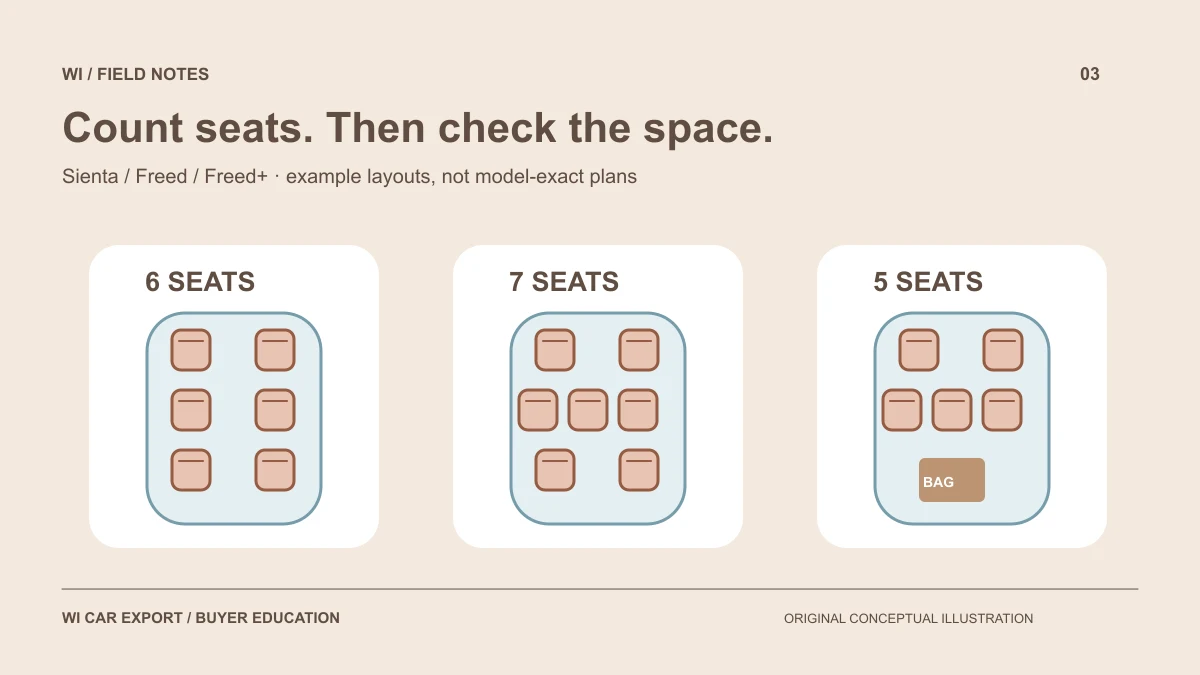
For a used Toyota Sienta versus Honda Freed comparison, start with the required seating layout—not a brand winner. Six seats, seven seats and a two-row load-focused version solve different problems. Confirm the actual configuration, then compare access and luggage space with your passengers accounted for.
This research-based guide focuses on the Japanese Sienta family launched in July 2015 and Freed family launched in September 2016. Later generations, later updates and specially adapted vehicles require their own specifications. We have not road-tested these cars or measured their cabins.
First, make sure you are comparing like with like
Toyota’s 2015 Sienta launch information lists six- and seven-seat passenger variants and describes a dive-in third-row storage mechanism. Honda’s 2016 launch information distinguishes three-row Freed models from two-row Freed+ models; the ordinary Freed+ passenger versions have five seats. Honda also identifies captain seats in the six-seat Freed. Sources: Toyota’s Sienta launch specifications and Honda’s Freed/Freed+ specifications.
| Your requirement | What to investigate first | Easy comparison mistake |
|---|---|---|
| Seven approved passenger places | The exact seven-seat Sienta and seven-seat Freed variants | Treating every car under either name as a seven-seater |
| Six places and separate second-row chairs | A matching six-seat layout, including the cited Freed captain-seat configuration | Assuming a seventh person can be accommodated because another trim has seven seats |
| Five people with more emphasis on load arrangement | A relevant two-row candidate such as the cited Freed+ | Comparing its load space with a three-row car carrying seven people |
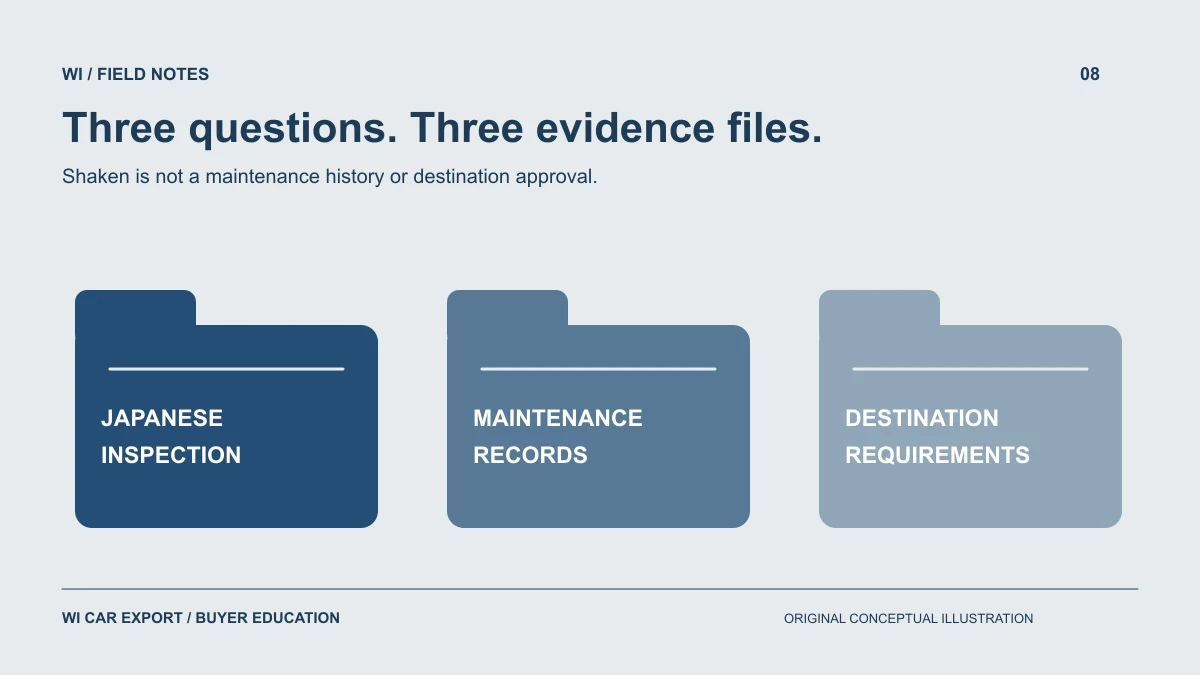
| A specific mobility adaptation | The actual adaptation and its documentation | Treating an ordinary passenger specification as evidence of accessibility |
The table is a shortlist aid, not an approval to alter seating. Use the actual vehicle documents and applicable destination requirements.
Seven seats are useful only if the journey still works
Write down a normal full-load trip: who sits where, which child restraints are needed, and what luggage must travel. Then check that exact arrangement. A photograph with the third row folded does not answer how much room remains when those seats are occupied.
Ask for photographs with the required seats in their normal positions and measurements of the remaining load area. Include the opening and any narrow points, not just the longest diagonal inside the cabin. Keep the method the same for both candidates.
For a family with six regular occupants, the seven-seat badge may add little if the six-seat arrangement provides the preferred access. For a household that genuinely needs seven approved positions, six comfortable-looking seats are not an alternative. Our broader family MPV versus SUV checklist helps define the journey before comparing models.
Test the conversion between passenger and luggage use
Manufacturer descriptions tell you the intended seat mechanisms, not whether an individual used car’s mechanisms operate correctly. Request a safe demonstration by someone familiar with the vehicle, following its manual, with the areas around seats and doors clear.
Consider how often you will change the layout. If you need the third row every weekday and extra cargo room each weekend, check the actual steps, the effort involved and where loose items go. A layout that looks versatile in an empty showroom may be awkward for your particular routine.
Do not ask a video to prove child-restraint compatibility. Check the vehicle and restraint instructions for the exact installation, with qualified assistance where necessary.
Keep the powertrain comparison separate
The 2016 Freed launch table includes petrol/CVT and hybrid/i-DCD seven-speed DCT variants. It is therefore inaccurate to treat every Freed as the same hybrid. Toyota’s cited Sienta table also distinguishes petrol and hybrid options. Identify the actual systems before comparing service requirements or economy. Honda variant table, Toyota variant table.
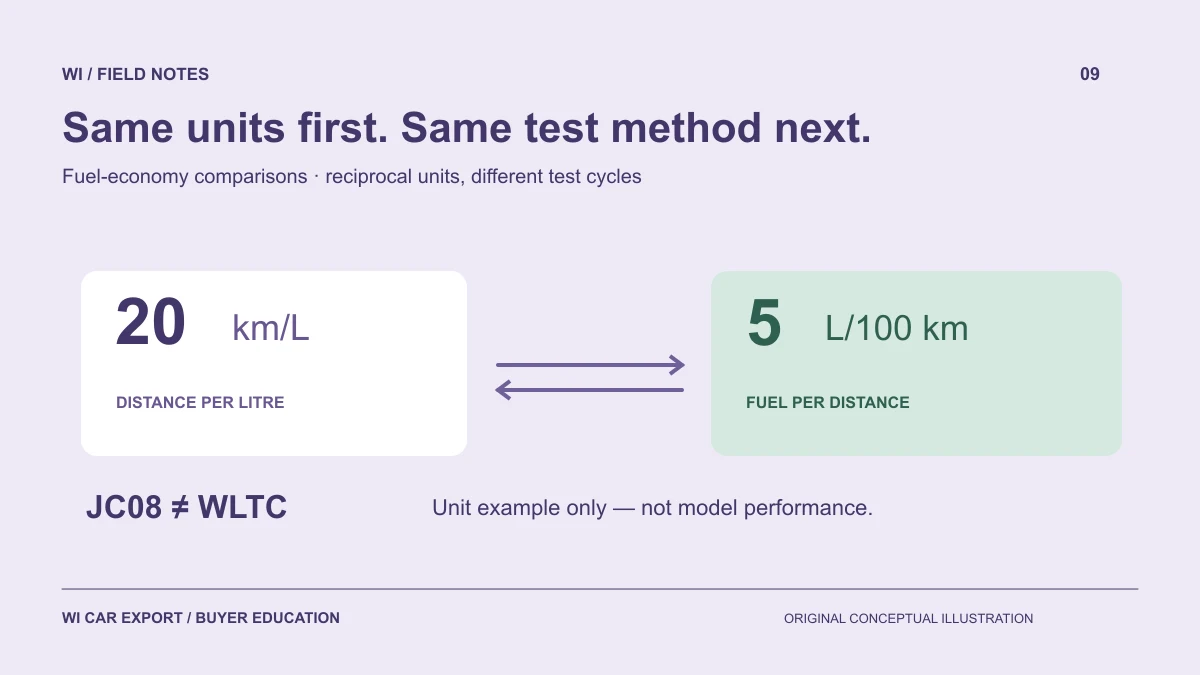
A fair budget uses equivalent price terms and relevant maintenance evidence. Do not compare one car’s laboratory consumption number with another owner’s city-driving result. Use the petrol-versus-hybrid cost method only with transparent, comparable inputs.
The decision should survive a change of badge
Imagine two hypothetical seven-seat candidates. Both meet destination eligibility requirements. One fits the family’s pushchair with all required seats up; the other needs a seat folded. If every seat is needed on that trip, the second car has failed a practical requirement regardless of its asking price or brand reputation.
Next compare condition, sliding-door operation, service records, local support and equipment that you have actually verified. The trim and options guide helps keep standard equipment separate from assumptions.
WI Car Export sells fixed-price Japanese vehicles sourced and exported by Washin Auto. Browse the stock catalogue and shortlist Sienta and Freed candidates with the same required seating capacity. Ask for the occupied-layout evidence before deciding which badge belongs on the driveway.
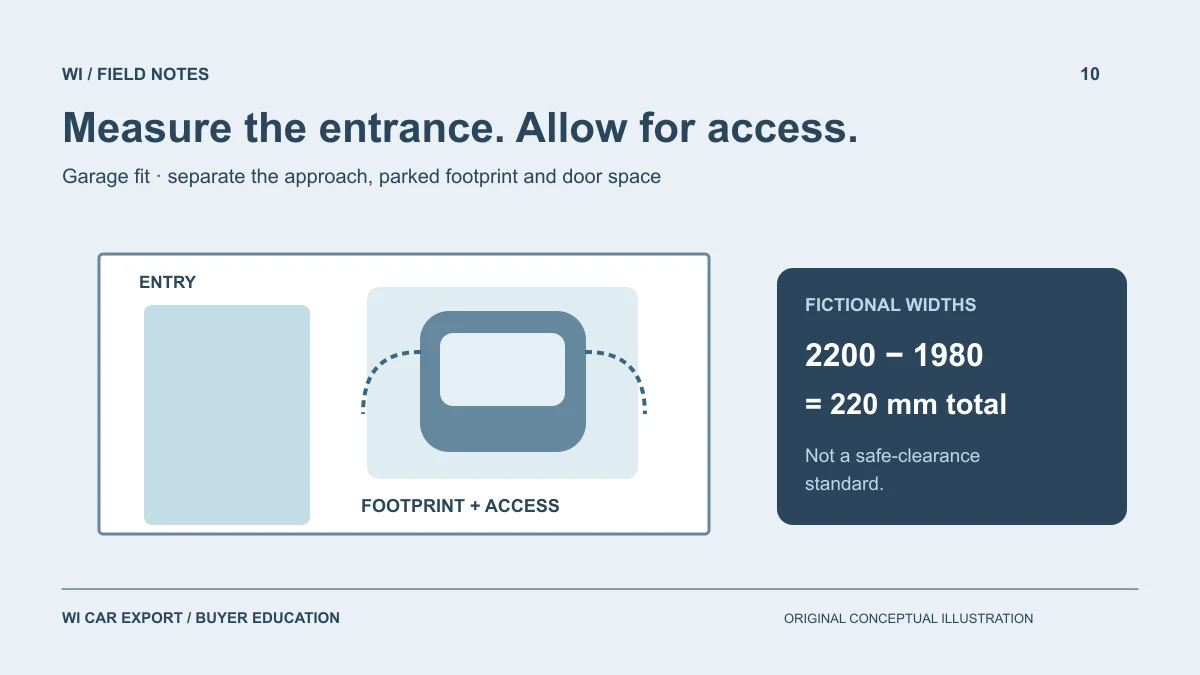
Illustration: original WI Car Export editorial artwork, created with AI assistance. Conceptual, not a vehicle photograph or technical inspection diagram.